
What Is Visceral Manipulation? A Gentle, Powerful Approach to Chronic Pain Relief
If you’ve been searching for answers to ongoing discomfort, digestive issues, pelvic pain, or unexplained tension in your body, you may have come across the term visceral manipulation. But what exactly is visceral manipulation, and how can it help relieve chronic pain and restore function?

If you’ve been searching for answers to ongoing discomfort, digestive issues, pelvic pain, or unexplained tension in your body, you may have come across the term visceral manipulation. But what exactly is visceral manipulation, and how can it help relieve chronic pain and restore function?
At Centerville Therapeutic Massage, we specialize in helping clients better understand their pain and return to doing what they love. With over 40 years of combined experience in bodywork and a deep love for anatomy, we take a whole-body approach to healing. One of the most powerful and often misunderstood techniques we use is visceral manipulation.
In this article, we’ll break down what visceral manipulation is, how it works, who it can help, and why it may be the missing piece in your pain relief journey.

What Is Visceral Manipulation?
Visceral manipulation is a gentle, hands-on manual therapy technique that focuses on the internal organs—also known as the viscera—and their surrounding connective tissues. Rather than working only on muscles and joints, visceral manipulation addresses the mobility and function of organs such as the stomach, liver, intestines, kidneys, bladder, and reproductive organs.
Each organ in your body has a natural, subtle movement. These movements are influenced by breathing, posture, and the surrounding connective tissue (fascia). When organs lose their natural mobility due to inflammation, surgery, trauma, infection, stress, or chronic tension, they can create restrictions that affect the entire body.
Visceral manipulation works to gently release these restrictions, restore proper movement, and improve communication between organs, muscles, nerves, and joints.
How Does Visceral Manipulation Work?
Your organs are not just floating loosely inside your body. They are connected to each other and to your musculoskeletal system through fascia—a web-like connective tissue that supports and links everything together.
When an organ becomes restricted, it can:
- Pull on surrounding fascia
- Create tension patterns in muscles and joints
- Compress nerves or blood vessels
- Disrupt normal movement patterns
For example:
- Restrictions around the liver can contribute to right shoulder pain.
- Tension in the intestines may influence low back discomfort.
- Bladder or uterine restrictions can contribute to pelvic pain.
- Scar tissue from abdominal surgery can create chronic tension patterns throughout the torso.
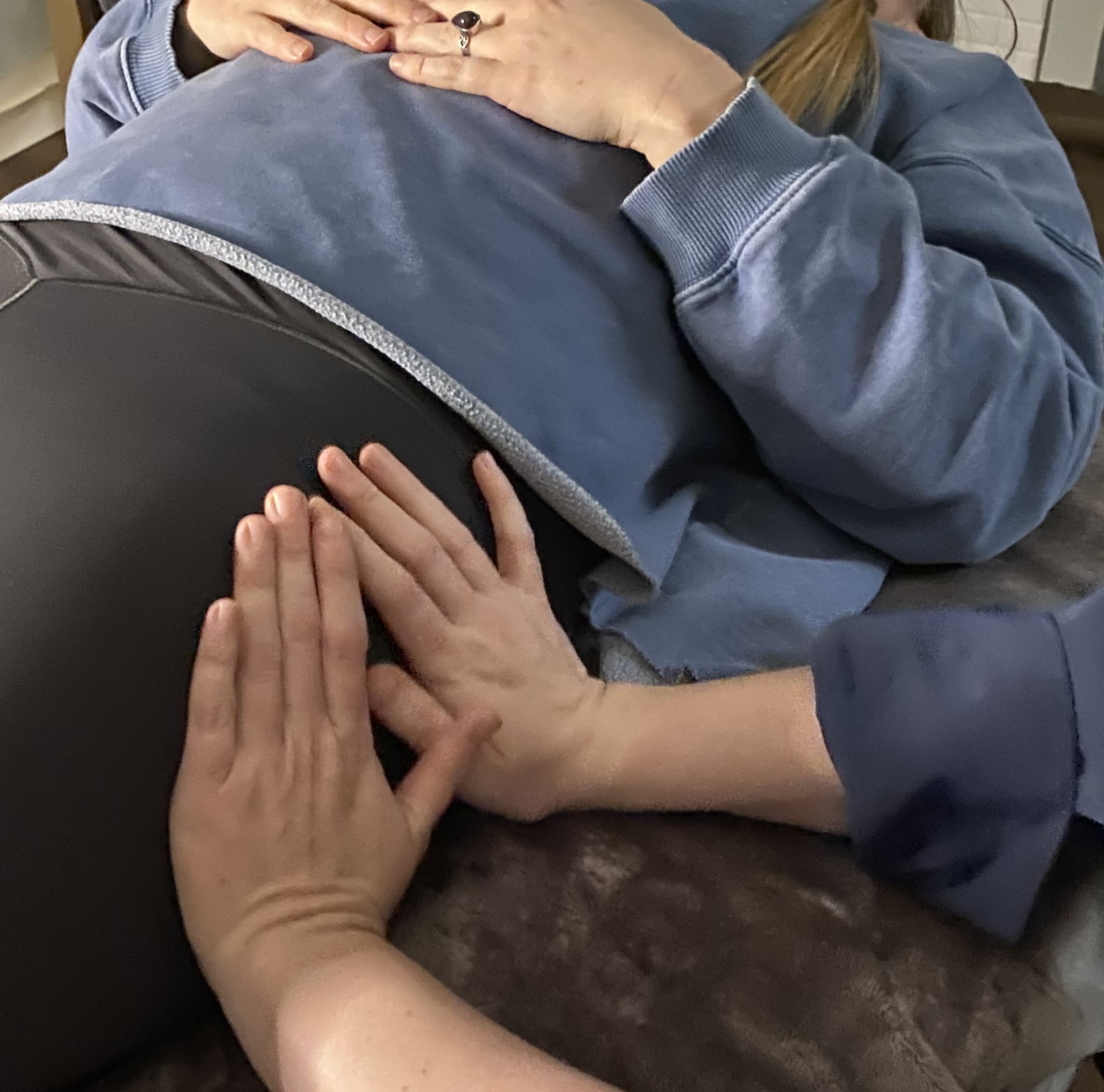
Visceral manipulation uses precise, gentle touch to assess where mobility is restricted. The practitioner then applies subtle manual pressure to encourage the organ and its connective tissues to release and return to healthy motion.
The work is not forceful. In fact, it is often very light and deeply specific. Clients frequently describe it as subtle yet profound.
Why Organ Mobility Matters
Healthy organs need to move freely in order to function properly. Every time you breathe, bend, twist, or stretch, your organs shift and glide against one another.
When organ mobility is restricted, it can lead to:
- Chronic pain
- Digestive discomfort
- Bloating or constipation
- Reflux
- Pelvic pain
- Headaches or migraines
- Postural imbalances
- Unresolved tension that doesn’t respond to traditional massage
Because the body functions as an integrated whole, dysfunction in one area can create compensation patterns elsewhere. That’s why some chronic pain conditions persist despite stretching, strengthening, or even traditional bodywork.
Visceral manipulation helps address the root cause rather than just the symptoms.
Conditions That May Benefit from Visceral Manipulation
At Centerville Therapeutic Massage, we work with a variety of healthy bodies and chronic pain conditions. Visceral manipulation can be especially helpful for clients dealing with:
- Hypermobility
- Fibromyalgia
- Migraines and chronic headaches
- Arthritis
- Degenerative disc disease
- Chronic neck or low back pain
- Sciatic pain
- Post-surgical scar restrictions
- Pelvic pain or menstrual discomfort
- Digestive disorders
- Chronic stress-related tension
Many of these conditions involve complex interactions between the nervous system, fascia, and internal organs. By improving organ mobility and reducing internal tension, visceral manipulation can support better overall function.
What Happens During a Visceral Manipulation Session?
If you’re new to visceral manipulation, you might wonder what a session actually feels like.
Here’s what you can expect:
1. Thorough Assessment
We begin by discussing your health history, symptoms, surgeries, injuries, and chronic pain patterns. Because visceral manipulation addresses internal structures, understanding your medical history is essential.
2. Gentle Palpation
You’ll typically lie comfortably on the massage table. The practitioner uses light touch to assess subtle motion in the abdomen, ribcage, and sometimes pelvis or thorax. This is not deep tissue work. The pressure is usually mild and highly targeted.
3. Specific Release Techniques
Once restrictions are identified, gentle techniques are applied to encourage mobility and release tension within the organ and surrounding fascia.
4. Integration
After releasing restrictions, we often integrate the work with musculoskeletal techniques to help the body adapt to its improved mobility.
Many clients report feeling lighter, more open in their breathing, or unexpectedly relieved in areas far from where the hands were placed.

Is Visceral Manipulation Safe?
When performed by a trained professional, visceral manipulation is considered safe and non-invasive. Because the techniques are gentle and precise, they are generally well tolerated—even by clients with chronic pain conditions like fibromyalgia or hypermobility.
However, certain acute medical conditions may require clearance from a healthcare provider before beginning treatment. A thorough intake process helps ensure that the therapy is appropriate for you.
The Nervous System Connection
One of the most powerful aspects of visceral manipulation is its effect on the nervous system.
Your organs are richly supplied with nerves, especially through the autonomic nervous system (which controls digestion, heart rate, stress response, and more). When organs are restricted, the nervous system can remain in a state of irritation or heightened stress.
By restoring organ mobility, visceral manipulation may:
- Reduce sympathetic (fight-or-flight) dominance
- Improve parasympathetic (rest-and-digest) function
- Support better digestion
- Decrease chronic tension
- Improve overall regulation
For clients dealing with long-term stress, trauma, or chronic pain, this nervous system support can be transformative.
Visceral Manipulation and Chronic Pain
Chronic pain is rarely just a muscle issue. It often involves:
- Fascial restriction
- Nervous system sensitization
- Old injuries or surgical scars
- Postural compensation patterns
- Internal organ tension
Because visceral manipulation addresses internal mobility and fascial tension, it can play a key role in resolving persistent pain that hasn’t responded to other therapies.
For example:
- A client with degenerative disc disease may experience reduced spinal tension when abdominal restrictions are released.
- Someone with migraines may notice improvement when restrictions around the stomach or diaphragm are addressed.
- Clients with fibromyalgia may benefit from improved nervous system regulation.
The goal isn’t just symptom relief—it’s restoring functional balance.
Visceral Manipulation vs. Traditional Massage
Traditional massage focuses primarily on muscles and soft tissue. While extremely beneficial, it doesn’t typically address the internal organs directly.
Visceral manipulation differs because it:
- Targets organ mobility
- Addresses deep fascial connections
- Focuses on subtle internal movement
- Works closely with the nervous system
At Centerville Therapeutic Massage, we often combine visceral manipulation with other therapeutic techniques to create a customized treatment plan based on your specific needs.
Who Is a Good Candidate for Visceral Manipulation?
You may be a good candidate for visceral manipulation if you:
- Have chronic pain that hasn’t fully resolved
- Experience digestive discomfort or bloating
- Have a history of abdominal surgery
- Feel persistent tension in your torso
- Have pelvic pain
- Deal with stress-related physical symptoms
- Want a more comprehensive, anatomy-focused approach
If you’ve been looking for someone to better understand your pain and help restore functionality, this could be the next step.
Why Choose Centerville Therapeutic Massage?
Located in the heart of the Turning Point Wellness Center in Centerville, our practice is built on a foundation of anatomical expertise and compassionate care.
With over 40 years of collective experience in bodywork, we specialize in:
- Chronic pain relief
- Complex conditions
- Functional restoration
- Personalized treatment plans
We believe that understanding the body deeply is the key to lasting change. Visceral manipulation is one of the advanced tools we use to facilitate healing—not just temporarily relieve discomfort.
Ready to Experience Visceral Manipulation?
If you’re curious about how visceral manipulation can support your healing journey, we invite you to schedule a session with us.
Pain doesn’t have to be your normal.
By addressing internal mobility, restoring organ function, and supporting nervous system balance, visceral manipulation offers a powerful, gentle path toward relief and restored function.
Book your appointment today at Centerville Therapeutic Massage and take the next step toward understanding your body—and feeling better in it.